Happy Halloween: The Eating Season Begins — Here’s How to Stay Healthy and Have Fun
— Dawn M. Sweet, Ph.D.
From Halloween to New Year’s, learn simple ways to spot emotional vs. physical hunger, set S.M.A.R.T. goals, and enjoy the season without derailing progress.
‘Tis the season. Not that season (yet)! It’s the season of pumpkin lattes and overflowing candy bowls and what many consider to be the start of “Eating Season.”
As the weather turns cooler and leaves fall, the calendar ushers in temptations like fun-size candy bars, Thanksgiving eat-a-thons, office parties, gatherings with friends, and New Year’s Eve celebrations — any one of which could present challenges even for those with the most steadfast commitment to eating healthy.
While this time of year is filled with the joy and excitement of seeing family, friends, and holiday traditions, it is also filled with speed bumps. Food is deeply woven into the fabric of social life, and the impending emotional roller coaster of the upcoming holiday season — nostalgia, happiness, stress, and anxiety — seems to wait for us like the Four Horsemen, looking for the right moment to influence what we eat, when we eat, and how much we eat.
The holiday weight gain trap does not need to be our destiny. We can arm ourselves with an understanding of the psychology of fall and winter eating as we learn to identify the signs of emotional hunger and set S.M.A.R.T. goals that are sustainable during the holiday season and throughout the year.
Psychology of Fall and Winter Eating
Cooler weather, shorter days, and longer nights elicit a shift in eating habits. While there is a cultural component to this shift, it is also underpinned by our biology and psychology.
· Psychology and Biology. Less sunlight and cooler weather prompt our bodies to crave warmth and comfort, which often translates into carbohydrate-dense and comfort foods. Less sunlight means our bodies produce less serotonin — the “feel-good hormone” — and more melatonin — the “sleepiness hormone.” These changes affect our mood, so we seek out carbohydrates, which boost serotonin. Increased melatonin leaves us feeling sluggish or fatigued, so we seek out carbohydrates for a quick energy boost. As temperatures dip, our bodies use more energy to maintain body heat (thermoregulation), and carbohydrates offer a quick fuel source to help us stay warm.
· Nostalgia. The fall and winter are steeped in tradition and rituals, and food is often at the center — from after-school snacks and pumpkin lattes to grandma’s apple pie and holiday turkeys — tethering us to memories and comfort and eliciting emotional responses. When we take that first sip of a pumpkin latte on a cool fall day or get that first whiff of grandma’s apple pie, we are awash in a sea of emotions. The pull of this connection can be strong. Even if we are not hungry, the olfactory cue (scent) of pumpkin lattes or apple pie can make them difficult to resist.
· Fresh Start. Many of us indulge over the holidays because we tell ourselves that we’ll start eating healthy in January. We unknowingly set up a false dichotomy — eat everything we want now and “eat better” in January. It does not need to be this way. We can strike a balance between allowing ourselves some indulgences through the holiday season while also eating healthy.
Physical Hunger and Emotional Hunger
Discriminating between emotional hunger and physical hunger can be challenging. Knowing the difference can help manage food intake during the holiday season.
· Physical Hunger: Physical hunger builds gradually and is connected to biology (e.g., an increase in the hunger hormone ghrelin). Physical hunger is not linked to one specific food (e.g., salty or sweet options); instead, we remain open to a range of choices. Physical hunger is felt in the body, not the mind (e.g., an empty sensation or rumbling in the stomach, lightheadedness, low energy, or irritability).
· Emotional Hunger: Emotional hunger begins suddenly and is often tied to specific cravings — usually for comfort foods like sweets or salty snacks. It’s triggered by emotions rather than an empty stomach and is often connected to stress, boredom, loneliness, or anxiety. Unlike physical hunger, emotional hunger doesn’t go away after eating; in fact, it’s often followed by guilt or regret, so the emotional circuit continues to run.
Five Strategies for Managing Emotional Eating
1. Pause before Eating: When a craving strikes, take a moment to ask, “Am I physically hungry, or am I trying to comfort myself?”
2. Rate Hunger: On a scale of 1 to 10, where 1 is “starving” and 10 is “stuffed,” aim to eat when you feel hunger at a 3 or 4 (starting to feel hungry) and stop at a 6 or 7 (comfortably full).
3. Identify the Emotion: Name the feeling — stress, loneliness, boredom. Simply labeling an emotion reduces its power.
4. Find Alternatives: Instead of reaching for food, try a short walk, deep breathing, journaling, or calling a friend.
5. Practice Self-Compassion: Don’t beat yourself up if you overeat. Recognize it, learn from it, and move forward. One indulgent moment doesn’t define your health journey.
Be S.M.A.R.T.
Creating sustainable healthy eating goals during the holiday season is crucial for mitigating weight gain. It’s important to create a plan that is S.M.A.R.T.:
· Specific: Move from the vague “I will eat healthy” to the specific “I will eat one serving of vegetables at lunch and dinner and one serving of whole grains with dinner.”
· Measurable: Track your progress in a way that can be measured. For example, “I will eat dessert on Wednesdays and Fridays.” This is measurable because the number of days you ate dessert can be counted.
· Achievable: Set realistic expectations. Being overly strict and completely removing foods can set us up for failure. For example, “I’ll drink water during the week and drink soda on the weekends” is something that most of us can do. Going completely cold turkey on a food item tends not to be an achievable goal.
· Relevant: What is our why? Why do we want to eat healthy? For example, “I want to have more energy,” “I want to control my blood glucose.” Knowing our bigger why helps keep us focused.
· Time-Bound: Adding a temporal parameter keeps us accountable. For example, “From Oct 15 to Jan 31, I will maintain my current weight by paying attention to what I eat and why I’m eating.” Over time, this attention to food intake becomes a habit, and the temporal parameter becomes less salient.
Non-Food Rewards to Keep Us on Track
Celebrating success is important, but do our rewards need to be food-based? Shifting our mindset to non-food rewards can reinforce healthy eating habits while also breaking the connection between food and emotion. Some ideas for a non-food reward are:
· A new pair of running shoes/sneakers
· New workout clothes or a new outfit for a night out with friends
· Spa day, massage, facial, manicure, or pedicure
· Taking a class in pursuit of a hobby
· Taking a weekly yoga class with friends
How Can Biocare Help During the Holidays?
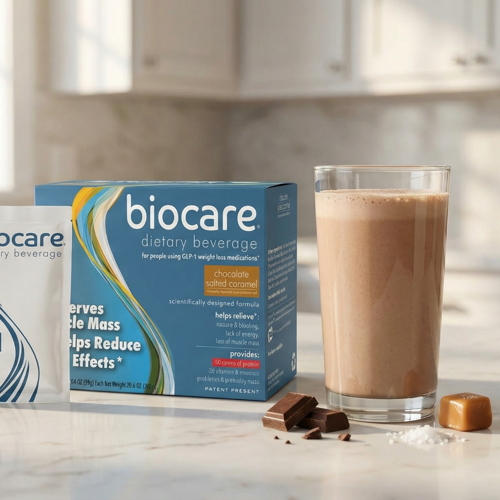
Here are practical ways Biocare beverages help you stay on track during “Eating Season”:
· Protein-first anchor: A quick Biocare before parties or sweets curbs cravings and helps you feel satisfied, so it’s easier to choose reasonable portions.
· Easy routine, zero friction: Pantry-friendly, ready in seconds—ideal for busy days, travel, and office events when balanced meals are hit-or-miss.
· Smart swaps, not strict rules: Use Biocare as a nutrient-dense swap for a skipped meal or as a steadier option between indulgent occasions.
· Structure without stress: Follow the Biocare Protein Meal Plan to hit clear daily protein targets (e.g., 60/90/120 g) while keeping room for seasonal treats.
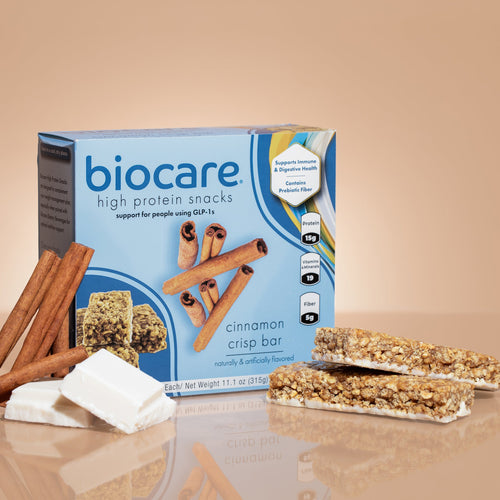
· Complementary snacks: Pair Biocare with high-protein snacks to satisfy “sweet/salty” urges without blowing up your day.
· GLP-1 friendly: If you’re on a GLP-1, Biocare makes it simpler to meet protein goals and maintain balanced nutrition as appetites fluctuate!
Progress, Not Perfection
The eating season is not about restriction — it’s about balance, so don’t let the pursuit of perfection be the enemy of the good. Pursuing perfection is exhausting. Trying to be perfect during the holidays often leads to burnout and overeating later. Instead, focus on progress and the goals and milestones that have been achieved.
Practice self-compassion. If you overindulge at one event, don’t punish yourself. Get back on track with the next meal. Aim for consistency, and accept that it is okay to indulge occasionally. Give yourself grace, enjoy the season, and take care of your mind and body in equal measure.
Halloween may usher in the eating season, but it does not have to derail healthy eating. Enjoy the season — not just the candy. Enjoy treats in moderation; completely removing that bite-size candy bar from your food intake will not help. Celebrate success along the way. Approaching the eating season with awareness and intention can help us maintain healthy eating habits while still enjoying all that it has to offer.
About the Author: Dr. Dawn M. Sweet has over 20 years of experience in the field of communication. Dr. Sweet has given several invited talks to and workshops for academic and private sector audiences on the role of nonverbal and verbal communication in achieving positive outcomes and mitigating bias. Her research has been published in several top ranked peer-review journals, and it has been featured on NPR’s River to River / All Things Considered, Buzzfeed, and Science Daily. Her research has also been used to inform expert testimony.