Non-Alcoholic Fatty Liver Disease Explained: What Is It and How GLP-1s May Help.
— Dawn M. Sweet, Ph.D.
Obesity is linked with conditions like type 2 diabetes, high blood pressure, heart disease, and sleep apnea. Another important one: non-alcoholic fatty liver disease (NAFLD). Here’s what to know.
Non-alcoholic fatty liver disease (NAFLD) is condition that occurs when fat builds up in the liver. It’s called non-alcoholic because it occurs in adults who don’t consume much alcohol. When NAFLD is present, for most adults it is “just” fat build up, called steatosis. However, it can evolve into non-alcoholic steatohepatitis (NASH). NASH is characterized by inflammation, injury to liver cells, and scarring (fibrosis). Over time, NASH could lead to liver failure, cirrhosis, or liver cancer.
There’s currently no FDA-approved medication specifically for NAFLD or NASH. Care typically focuses on lifestyle changes—following a healthy eating plan and adding regular, sustainable physical activity to support weight loss.
With the known success of glucagon-like peptide-1 medications (GLP-1s) for blood glucose (sugar) control and weight loss, these medications are now being considered for use in adults with NAFLD and/or NASH.
What is Glucagon-Like Peptide-1 (GLP-1)?
Glucagon-like peptide-1 is an intestinal hormone that is released after eating. It functions in several ways:
- It stimulates insulin release
- It suppresses glucagon release
- It slows gastric emptying
- It helps reduce appetite
GLP-1 medications like Mounjaro, Ozempic, Victoza, and Wegovy mimic the naturally occurring GLP-1 hormone.
How GLP-1s Could Help Non-Alcoholic Fatty Liver Desae and Non-Alcoholic Steatohepatitis?
While GLP-1s are not currently approved to treat non-alcoholic fatty liver disease (NAFLD) or non-alcoholic steatohepatitis (NASH), the medical community and researchers believe they can be used to mitigate fatty build up in the liver and the associated risks of NASH.
So, how can GLP-1s help?
· GLP-1s reduce appetite slow digestion and increase satiety (feeling full). This leads to decreased food intake and reduces caloric intake, which in turn lead to clinically significant weight loss.
· Pairing a GLP-1 medication with exercise amplifies weight loss
· GLP-1s improve insulin resistance, which means that bodies respond more effectively to insulin. The liver is “overworked” less, trying to convert sugar to fat.
· GLP-1 medications could reduce the amount of fat moving into the liver, thus improving insulin signaling, reducing inflammation, and reducing signals that promote fat production.
· Inflammation associated with NASH could be mitigated by the anti-inflammatory effects of GLP-1s
· If scarring or fibrosis is present, it may improve over time if it is not advanced. Over an extended period, reductions in inflammation and injury may stabilize fibrosis or even regress. However, if the scarring is more advanced, reversal is more difficult.
What to Know about Taking GLP-1s for NAFLD and NASH
GLP-1 medications for NAFLD and NASH are considered a supportive therapy and not a cure. GLP-1 medications are one tool available to healthcare professionals and patients. As noted above, lifestyle changes to diet and exercise remain the first line of defense against NAFLD and NASH.
GLP-1 medicines may be more effective when started in the early to moderate stages of NAFLD or NASH. That’s why it’s important to talk with your healthcare provider about your liver health as part of your weight-loss program. Be an advocate for your health and ask about checking liver enzymes such as ALT and AST (alanine aminotransferase and aspartate aminotransferase, respectively), which can indicate liver injury related to fatty liver disease. You can also discuss noninvasive fibrosis risk scores and whether diagnostic imaging — like ultrasound or MRI — makes sense for you.
But what about the side effects of GLP-1s?
GLP-1 medications, like all medications, do have side effects. The most common side effects of GLP-1 medications are nausea, vomiting, diarrhea, and bloating. For many patients, these side effects are temporary. These medications are generally considered safe and work best when paired with dietary lifestyle changes and exercise.
Because GLP-1 medications suppress appetite and reduce food intake, it is important to implement dietary lifestyle changes that focus on foods that are nutritional dense. When your appetite is lower, it can be harder to meet daily protein and micronutrient goals with regular meals alone — especially if you’re also managing GLP-1–related nausea or early fullness.
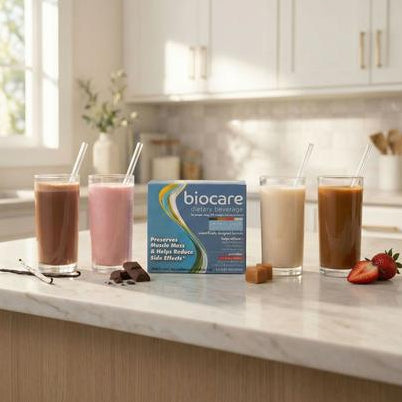
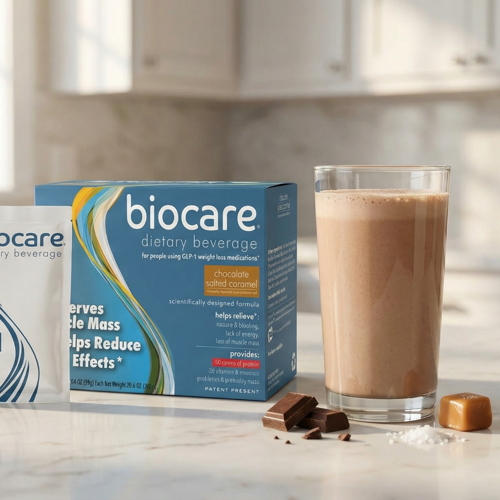
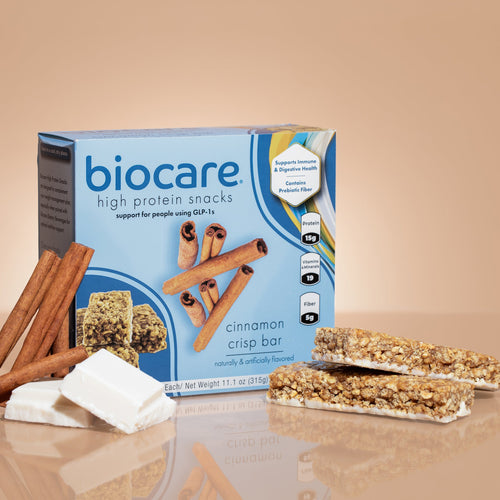
When GLP-1 medications do their job, hunger drops — and so does the desire to eat enough protein and nutrient-dense foods. Biocare fills that gap with a convenient dietary beverage delivering 30 g of high-quality protein, 26 essential vitamins & minerals, and prebiotic fiber + a probiotic to support digestive comfort. It’s an easy, sip-friendly way to meet daily nutrition targets and help protect lean muscle while your appetite is lower. Plus, Biocare contains gut-supportive ingredients formulated to help manage common GLP-1 side effects.
Before making dietary changes or beginning any exercise program be sure to consult with your healthcare provider to make sure your desired weight loss strategy is right for you.
About the Author: Dr. Dawn M. Sweet has over 20 years of experience in the field of communication. Dr. Sweet has given several invited talks to and workshops for academic and private sector audiences on the role of nonverbal and verbal communication in achieving positive outcomes and mitigating bias. Her research has been published in several top ranked peer-review journals, and it has been featured on NPR’s River to River / All Things Considered, Buzzfeed, and Science Daily. Her research has also been used to inform expert testimony.
NOTE: The information provided on this platform is intended for informational purposes only. It is not a substitute for professional medical advice, diagnosis, or treatment. Always seek the advice of your physician or other qualified health provider with any questions you may have regarding a medical condition. Never disregard professional medical advice or delay in seeking it because of something you have read on this platform. Furthermore, the information provided here has not been reviewed or approved by a health care professional. Any reliance you place on such information is strictly at your own risk. We do not endorse or guarantee the accuracy, completeness, or usefulness of any information provided. It's important to consult with a qualified health care professional before making any changes to your diet, exercise, medication, or treatment regimen. Reliance on any information provided on this platform is solely at your own risk.