The Biocare blog · Muscle 101
Muscle mass for dummies: what really happens when you lose muscle on a GLP-1.
Everyone says "protect your lean muscle mass" on Ozempic, Wegovy, Mounjaro, or Zepbound. But what does that actually mean — and what really happens if you don't? Here's the no-jargon version.
The short version: when you lose weight quickly, some of what you lose is muscle, not just fat. Muscle runs your metabolism, keeps you strong, and helps manage blood sugar — so protecting it (with enough protein and a little strength training) is how you lose fat without wrecking the engine that keeps the weight off.
First — what is "lean muscle mass," really?
"Lean muscle mass" is just a slightly fancy way of saying the muscle on your body — the tissue that moves you, holds you upright, and quietly burns energy all day. "Lean" simply means we're counting it separately from body fat.
Your body weight is roughly a mix of fat mass and fat-free mass (muscle, bone, water, and organs). Muscle is the part of that you have the most control over — and the part most worth protecting.
Think of muscle as your body's engine, and fat as stored fuel. The goal is to burn the fuel — not shrink the engine.
Why you lose muscle when you lose weight (and why GLP-1s make it a thing)
Here's what nobody tells you: any time you lose weight, some of it comes from muscle — not just fat. That's normal. But a few things about GLP-1 medications can tip the balance toward losing more muscle than you'd like:
• Your appetite drops — a lot. Eating less makes it easy to fall short on protein, the raw material your body uses to maintain muscle.
• Weight can come off fast. The quicker you lose, the bigger the share that tends to come from lean tissue.
• "Use it or lose it." If you're not giving your muscles a reason to stay (movement, resistance), the body is happy to break them down for fuel.
Research suggests a meaningful chunk — by some estimates anywhere from about a quarter to nearly half of the weight lost during rapid weight loss — can be fat-free mass (muscle and other lean tissue), not pure fat. As Harvard Health explains, losing weight too quickly can accelerate the burning of muscle protein right along with fat. The exact number varies from person to person, but the takeaway is simple: without a plan, you can lose more muscle than you bargained for.
What your muscle actually does for you
Muscle isn't just for looking toned. It's working for you around the clock:
Runs your metabolism
Muscle burns calories even at rest. More muscle means a higher "idle" burn — lose it, and your calorie thermostat turns down.
Keeps you strong
Carrying groceries, climbing stairs, getting up off the floor. Strength is everyday independence and quality of life.
Steadies blood sugar
Muscle is the body's biggest "sink" for blood sugar — it pulls glucose out of your blood and stores it, helping keep levels steady.
Protects healthy aging
We naturally lose muscle as we age (called sarcopenia). Banking muscle now protects mobility and independence later.
Supports bones & balance
Strong muscles support your joints and bones and help you stay steady on your feet — fewer stumbles and falls.
Helps you recover
Muscle and its protein are part of how your body heals, fights off illness, and bounces back.
What really happens when you lose too much muscle
So what actually goes wrong if too much of your weight loss comes from muscle? A few things — and they tend to feed each other:
• Your metabolism slows. Less muscle means you burn fewer calories at rest, which can make losing more (and keeping it off) harder.
• You feel weaker and more tired. Everyday tasks take more effort and workouts feel tougher.
• Weight comes back more easily. This is the big one. If you lose muscle, then regain weight later, that regain is usually fat — leaving you with a higher body-fat ratio than when you started. It's a major reason for the dreaded "rebound."
• Blood sugar gets harder to manage. Less muscle means less room to store glucose.
• Aging gets riskier. Stacked on top of natural age-related loss, it can speed the slide toward frailty and falls down the road.
None of this is meant to scare you — it's the opposite. It's exactly why "protect your muscle" is the best advice on a GLP-1. You're not trying to lose weight; you're trying to lose fat and keep the engine.
How to protect your muscle on a GLP-1 (the simple playbook)
Eat enough protein
This is number one. Protein is the raw material your body uses to hold onto muscle. Spread it across meals and snacks, and lead with it when your appetite is low. Not sure of your number? Use our protein calculator.
Do a little resistance training
Give your muscles a reason to stay. Two or three short strength sessions a week — resistance bands, light weights, or bodyweight moves — send the "keep me" signal, and even chair exercises count. Follow along with our exercise videos to get started. The National Institute on Aging calls strength training the most effective way to protect muscle as we age.
Don't rush the weight loss
Faster isn't better for body composition. A steadier pace protects more muscle. Talk with your provider about the right speed for you.
Don't undereat everything else
Enough overall calories and nutrients — not just protein — keep your body from raiding muscle for fuel. Fiber, fruits, vegetables, and whole foods all matter, and our protein meal plans make balanced, muscle-supporting eating easy.
Stay consistent, hydrate & sleep
Muscle is built and repaired during recovery. Regular habits, water, and quality sleep do quiet but real work.
Where Biocare fits
The easiest way to hit your protein.
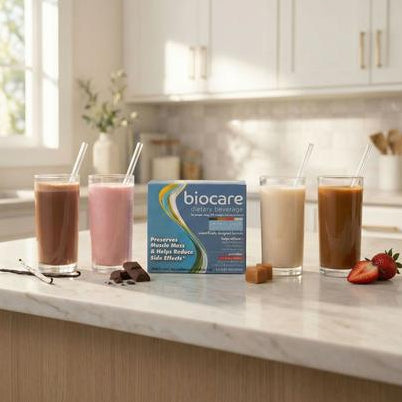
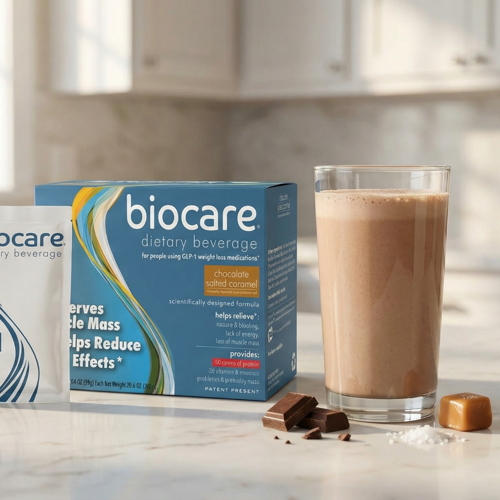
Hitting your protein target is the hardest part once a GLP-1 has shrunk your appetite — and it's exactly where a high-protein shake earns its place. Each Biocare shake delivers 30g of high-quality protein (the kind your muscles can actually use), plus prebiotic fiber and 26 vitamins and minerals, in a low-volume serving that's easy to get down on days when food feels like too much.
Shop 30g protein shakesMuscle on a GLP-1: quick answers
What is lean muscle mass?
Lean muscle mass is the muscle tissue on your body, counted separately from body fat. It's part of your "fat-free mass" (which also includes bone, water, and organs) and it's the tissue that moves you, keeps you strong, and burns energy at rest.
Do you lose muscle on Ozempic or other GLP-1 medications?
Some muscle loss happens with any weight loss, including on GLP-1s. Because these medications reduce appetite and can lead to fast weight loss, it's easier to lose more lean tissue than you'd like — which is why protecting muscle with protein and strength training matters.
How much muscle do you lose on a GLP-1?
It varies a lot by person. Research suggests roughly a quarter to nearly half of the weight lost during rapid weight loss can be fat-free mass (muscle and other lean tissue) rather than pure fat. A plan that includes adequate protein and resistance training can shift more of your loss toward fat.
Does losing muscle slow your metabolism?
Yes, to a degree. Muscle burns calories even at rest, so losing it lowers the number of calories you burn just existing. That can make continued weight loss harder and weight regain easier — another reason to protect it.
How do I keep muscle while taking a GLP-1?
Eat enough protein (spread across meals and snacks), do some resistance training a couple of times a week, avoid losing weight too fast, eat enough overall, and prioritize sleep and recovery. Work with your provider on your pace and plan.
How much protein do I need to maintain muscle?
It depends on your body and goals, but many adults aim for protein at every meal (often around 20–30 grams) plus protein-rich snacks. Our protein calculator gives a personalized estimate to confirm with your provider.
Can you rebuild muscle after losing it?
Yes. With enough protein and regular resistance training, the body can rebuild muscle over time. It's easier to protect muscle as you go than to rebuild it later, but it's never too late to start.
This article is for general education and is not medical advice. Individual needs and results vary. Always consult your physician, healthcare provider, or a registered dietitian before changing your diet, exercise, or medication. These statements have not been evaluated by the Food and Drug Administration. This product is not intended to diagnose, treat, cure, or prevent any disease.