GLP-1s may contribute to loss of muscle strength and mass — if you are not cautious.
By now, we all know someone who has taken a GLP-1 RA like Ozempic or Zepbound for weight loss or blood sugar control. Or maybe you’ve taken one of these medications yourself to achieve weight loss goals and have begun to query, “do you lose muscle on Ozempic?” And what about strength?
While the loss of lean mass is not uncommon during active weight loss, is it amplified when taking Ozempic?
Let’s look at whether you lose muscle on Ozempic, whether Ozempic may lead to loss of muscle strength and mass, and — if so — how to prevent muscle loss on Ozempic.
Do You Lose Muscle on Ozempic? Does Ozempic Lead to Loss of Muscle Strength and Mass?
The short answer is yes; it could. Ozempic may lead to loss of muscle strength and mass — if you are not cautious. While there is no direct causal link between Ozempic and loss of muscle mass and strength, the way Ozempic and other GLP-1 medications work is such that fat mass and muscle mass can be lost concurrently, if precautions are not taken.
Muscle loss during active weight loss is not an Ozempic-specific phenomenon. Muscle loss during active weight loss, regardless of the method, is common. During calorie restriction, like that experienced when taking Ozempic, our bodies pull energy from fat and muscle to give it the energy it needs, thus reducing the amount of lean mass we have.
As muscle mass is reduced, we are at risk for slowed weight loss because losing muscle lowers our metabolic rate, which can lead to the dreaded weight loss plateau. Additionally, we rely on muscle for mobility and skeletal health. Because muscle plays such a key role in strength, bone density, metabolism, and mobility, it is important to understand how Ozempic may lead to loss of muscle strength and mass.
Because of the rapid weight loss associated with Ozempic and similar GLP-1 medications, it is not uncommon to lose fat mass and lean mass concurrently. Research has shown that just over 86 percent of adults enrolled in a clinical trial lost five percent or more of their body weight, which is considered clinically significant. Research has also shown that semaglutide has been associated with up to a 40 percent loss in lean mass. Despite this, there are strategies to prevent muscle loss on Ozempic.
How to Prevent Muscle Loss on Ozempic
Preventing muscle loss on Ozempic is possible, and there are evidence-based strategies for how to avoid losing muscle mass on Ozempic and other GLP-1 medications. A two-pronged approach that marries diet and exercise is the optimal strategy to avoid losing muscle mass on Ozempic.
Protein
Protein is the strongest arrow in your quiver when it comes to mitigating or preventing muscle loss on Ozempic. Insufficient protein consumption can amplify the loss of lean muscle, so it is important to note the recommended daily allowance (RDA) of protein for adults.
The Recommended Dietary Allowance (RDA) for protein has been established as 0.8 grams of protein for each kilogram of body weight. This translates to 0.36 grams of protein per pound of body weight. It is recommended that 10to 35 percent of your daily caloric intake should come from protein. However, to help preserve lean mass throughout weight loss, a high protein diet of at least 1.2 – 1.6g / kg of weight is advised per new research.
To determine your daily protein intake, multiply your body weight in pounds by 0.36. Alternately, you can use this online protein calculator. Be sure to consult with your healthcare provider to confirm how many daily grams of protein are best for you.
In response to the question, “how to prevent muscle loss on Ozempic?” build protein-rich dietary foundations that include foods such as:
- Lean meat such as beef, chicken, pork
- Eggs and egg whites
- Greek yogurt
- Dairy products such as milk, cheese, and yogurt
- Seafood such as salmon, tuna, and cod
- Plant-based sources such as soybeans, lentils, and chickpeas
- Tofu or Tempah
- Whey protein
For additional suggestions for protein-rich foods, consult the Dietary Guidelines for Americans.
Also important to keep in mind is that protein is critical for skeletal health and mobility, so while you are building and maintaining lean mass, you are also protecting and supporting skeletal health and helping yourself stay mobile.
Strength Training
Resistance training is crucial for building muscle and strength. If you cannot get to a gym or afford a fancy at-home gym, there are body-weight exercises that you can try at home:
- Squats
- Lunges
- Push-ups (modified if needed)
- Resistance bands
- Glute bridges
- Light dumbbell training
- Save empty detergent bottles with handles and fill them with water or sand to mimic weights
- Yoga
- Pilates
The CDC recommends 150 minutes of moderate activity per week. Before beginning any exercise program be sure to consult with your healthcare to provider to determine what is safe and what is optimal for you.
Signs of Losing Lean Mass*
If you are concerned about the loss of lean mass while taking Ozempic, here are some signs to watch for:
- Decline in strength: difficulty lifting objects that previously felt light, difficulty transitioning from a seated to a standing position without using your hands, feeling weak during routine, day-to-day activities like grocery shopping, carrying grocery bags, doing laundry, and climbing stairs.
- Softer Look: noticing your arms or legs don’t look as toned as they once did or your body feels softer.
- Less endurance: inability to walk or jog/run/cycle/hike as far, feeling fatigued more quickly than you previously did when pursuing endurance-based activities.
- Aches or pains in joints: loss of lean mass can increase strain on knee and hip joints; muscle helps our skeleton support our body weight, and muscle helps our joints support workload.
*If you are experience decreases in energy, strength, endurance, or aches and joint pain, be sure to consult with your healthcare provider to rule causes other than loss of lean mass.
While you can certainly lose muscle mass and strength on Ozempic, it could be mitigated through dietary changes, e.g., managing protein intake, and exercise. Be sure to monitor for signs of muscle loss like weakness, fatigue, reduced endurance, and a less firm physical appearance. Be sure to prioritize diet and exercise while taking Ozempic.
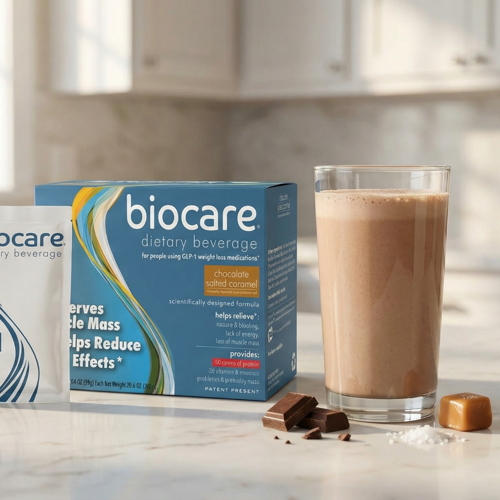
Because of challenges that are sometimes associated with meeting the RDA for protein coupled with GLP-1 side effects, including a scientifically-formulated could help with each. Biocare is one such supplement.
As part of a healthy eating plan, Biocare’s scientifically formulated beverages are an effective way to jumpstart your journey toward healthy eating. Biocare’s nutritional composition can help satisfy your daily recommended allowance (RDA) for macronutrients and micronutrients.
Biocare optimizes dietary protein absorption. It includes 30 grams for high quality whey and calcium caseinate protein, and provides three grams of leucine per serving — which is important because leucine is an important amino acid that promotes muscle repair and growth. Biocare is a complete protein, providing the complete set of essential amino acids at levels required for protein synthesis.
Before making dietary changes or beginning any exercise program be sure to consult with your healthcare provider to make sure your desired weight loss strategy is right for you.
About the Author: Dr. Dawn M. Sweet has over 20 years of experience in the field of communication. Dr. Sweet has given several invited talks to and workshops for academic and private sector audiences on the role of nonverbal and verbal communication in achieving positive outcomes and mitigating bias. Her research has been published in several top ranked peer-review journals, and it has been featured on NPR’s River to River / All Things Considered, Buzzfeed, and Science Daily. Her research has also been used to inform expert testimony.