Questions to ask your doctor before starting a GLP-1
A GLP-1 is a medical decision, and the best starts begin with a good conversation. Here are the questions worth bringing to that appointment.
Starting a GLP-1 is a decision to make with your prescribing clinician — not something to sort out alone or online. Go into the appointment ready to ask whether it's a good fit for you, how dosing works, what side effects to watch for, what results are realistic, what it will cost, and how to support your body nutritionally. Below is a checklist of questions to bring.
Why this is a conversation, not a solo decision
GLP-1 medications like semaglutide and tirzepatide are prescription drugs, and the right choice depends on your health history, the other medications you take, and your goals. Your clinician is the person who can weigh all of that — which is exactly why walking in with good questions leads to better care.
You don't need to be an expert. You just need to know what's worth asking so nothing important gets missed in a short appointment. Here's where to focus.
Questions worth asking
Six areas tend to matter most. Consider jotting down the ones that apply to you and bringing them along.
Is this right for me?
"Given my health history and goals, is a GLP-1 a good fit — and which one?"
How does dosing work?
"How do I start, how will the dose change over time, and how is it taken?"
What side effects should I watch for?
"What's common, what should I do about them, and when should I call you?"
How will it affect my eating?
"How should I adjust my nutrition, and how much protein should I aim for?"
What results are realistic?
"What's a reasonable expectation for someone like me, and over what timeline?"
Cost & long-term
"What will this cost, what does my insurance cover, and how long might I take it?"
How to get the most out of the appointment
-
Write your questions down first
Appointments are short. A written list means the things that matter to you actually get asked.
-
Bring your full health picture
Have your current medications, supplements, conditions, and allergies ready so your clinician can weigh everything.
-
Ask specifically about nutrition
Appetite usually drops, so ask how to prioritize protein, fiber, and fluids — and how much protein to aim for. Our protein calculator gives you a starting number to discuss.
-
Get a plan for side effects
Ask what's typical, what to do if it happens, and when to call. Knowing the plan ahead of time takes a lot of the worry out.
-
Clarify logistics and follow-up
Confirm your dosing schedule, when to check back in, and who to contact between visits.
The one part you can set up in advance
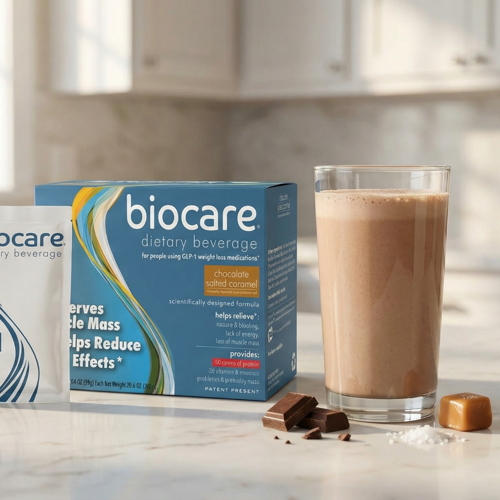
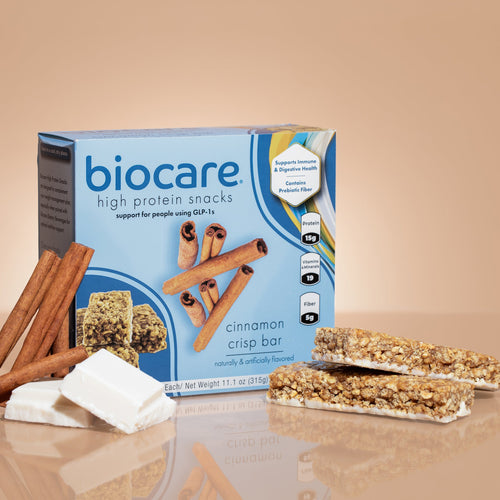
The medical decisions belong with your clinician — but the nutrition side is something you can get ready before day one, and it's what Biocare is built for. Having easy protein, fiber, and hydration on hand means that when appetite drops, eating well is already sorted. Protein supports muscle maintenance and fiber supports digestive regularity — two things worth protecting from the start. Our getting-started checklist walks through the rest of the prep.
See the starter checklistFrequently asked questions
Do I need to see a doctor to start a GLP-1?
What should I ask about side effects?
Should I ask about protein and nutrition?
Can my regular doctor prescribe a GLP-1?
What if I'm worried about cost?
How do I prepare nutritionally before I start?
Keep going
Sources
- Cleveland Clinic — GLP-1 Agonists: What They Are, How They Work & Side Effects. my.clevelandclinic.org/health/treatments/13901-glp-1-agonists
- U.S. Food and Drug Administration — Information about GLP-1 medications and weight-loss drugs. fda.gov
This article is for general education and is not medical advice. GLP-1 medications are prescription drugs; decisions about starting, dosing, or changing them should be made with your prescribing clinician. Always consult your physician or healthcare provider before making changes to your health or diet program. These statements have not been evaluated by the Food and Drug Administration. This product is not intended to diagnose, treat, cure, or prevent any disease.
Biocare is not affiliated with, endorsed by, or sponsored by the makers of Ozempic®, Wegovy®, Mounjaro®, or Zepbound®. All trademarks are the property of their respective owners.
Fuel smarter. Feel stronger. Live better.