The Biocare blog · Protein & aging
How much protein do adults over 50 really need?
After 50, your body handles protein a little differently — and the basic recommendation may not be enough to support the muscle you want to keep. Here's what the research says, and how to actually hit your number.
The short version: the baseline of 0.8 grams of protein per kilogram of body weight is a floor, not a goal. After 50, many experts suggest aiming higher — often around 1.0–1.2 grams per kilogram or more — to support muscle as you age. Just as important: spread it across meals (roughly 25–30g each) and pair it with strength training. Most older adults fall short, so the real move is getting protein in at every meal.
Why protein needs change after 50
Starting in our 30s and accelerating later, we naturally lose muscle with age — a process called sarcopenia. On top of that, older muscle becomes a bit less responsive to protein (researchers call this "anabolic resistance"), which means you may need more protein in a meal to get the same muscle-supporting effect a younger person gets from less.
Add a smaller or pickier appetite — common with age, and even more so on a GLP-1 — and it's easy to quietly fall short. The good news: protein supports muscle maintenance, and it's one of the most controllable levers you have. (More from the NIH.)
The goal after 50 isn't to eat like you're 25. It's to give aging muscle a little more of what it needs — and to actually hit it.
So how much protein do you actually need?
The official RDA is 0.8 g of protein per kg of body weight per day — but that's the minimum to prevent deficiency, not the amount that best supports muscle as you age. Many researchers suggest healthy older adults aim higher.
In real numbers: someone around 150 lb (about 68 kg) lands near 68g/day at the baseline, but closer to 70–85g+ at the higher end. Want your personal target? Our protein calculator does the math in a minute. (Always confirm what's right for you with your provider.)
Why protein matters more after 50
Muscle maintenance
Protein supports the muscle that naturally declines with age — the tissue most worth protecting.
Strength & independence
Carrying groceries, climbing stairs, getting up off the floor — everyday strength is everyday freedom.
Balance & stability
Strong muscles support your joints and help you stay steady on your feet.
Recovery
Protein is part of how the body repairs and bounces back from illness, injury, and everyday wear.
Anabolic resistance
Older muscle responds less to protein, so a solid amount per meal matters more than it used to.
Appetite dips
Eating less makes protein easy to miss. After 50, it pays to be intentional about getting it in.
How to hit your protein after 50
Aim for protein at every meal
Roughly 25–30g per meal beats loading it all into dinner — and helps you clear that per-meal threshold for muscle.
Don't skip breakfast
Breakfast is the most-skipped meal and the easiest place to add protein. Front-loading sets up your whole day.
Add resistance training
Protein and strength work go together — a couple of short sessions a week give muscle a reason to stay. Try our exercise videos.
Use easy anchors
When appetite or time is short, a protein shake or a quick high-protein meal keeps you from falling behind.
Know your number
Guessing is how people fall short. Our protein calculator turns "more protein" into a concrete daily target.
Where Biocare fits
An easy way to hit your number.
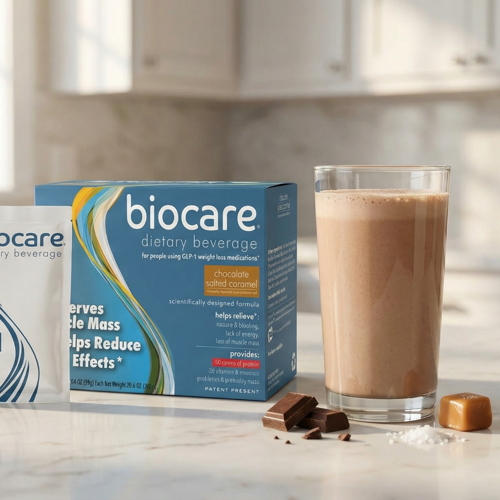
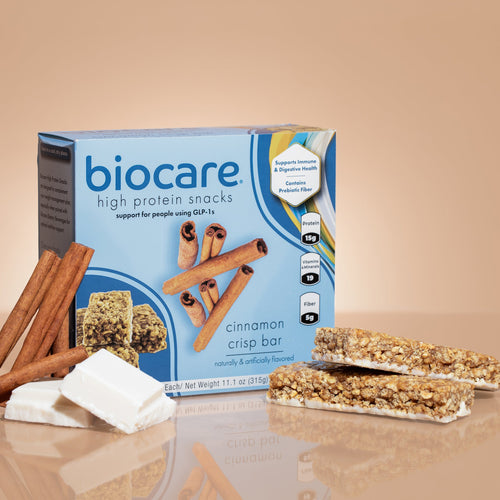
Getting 25–30g of protein at every meal is simple in theory and tricky in real life. Biocare makes it easy: 30g protein shakes (with added leucine), 35g protein entrees, and our Biocare2 line built around protein for muscle maintenance — all single-serve and ready in minutes. Whatever your appetite, there's a way to support your muscle as you age.
Explore protein for muscle maintenanceProtein after 50: quick answers
How much protein should someone over 50 eat per day?
The baseline RDA is 0.8 g per kg of body weight, but many researchers suggest healthy older adults aim higher — often around 1.0–1.2 g per kg or more — to better support muscle. Spread it across meals and confirm what's right for you with your provider.
Why do older adults need more protein?
Two reasons: we naturally lose muscle with age, and older muscle is less responsive to protein (anabolic resistance). Together, that means a solid amount of protein per meal matters more than it did when you were younger.
How much protein should I aim for per meal?
Roughly 25–30 grams per meal is a useful target for supporting muscle, and spreading protein evenly across the day tends to work better than saving most of it for dinner.
Can I get enough from food, or do I need shakes?
Whole foods come first and bring plenty of other nutrients along. Shakes and high-protein products are a convenient way to fill gaps on days when appetite is low or time is short.
Does protein alone keep muscle?
No — protein and resistance training work together. Eating enough protein gives muscle the raw material, and strength training gives it a reason to stay.
Can you eat too much protein?
For most healthy adults, moderate-to-higher protein is well tolerated. If you have kidney disease or another medical condition, talk with your healthcare provider about the right amount for you.
This article is for general education and is not medical advice. Individual needs and results vary. Always consult your physician, healthcare provider, or a registered dietitian before making changes to your diet, exercise, or protein intake — especially if you have a medical condition such as kidney disease.
These statements have not been evaluated by the Food and Drug Administration. This product is not intended to diagnose, treat, cure, or prevent any disease.
Ozempic® and Wegovy® are registered trademarks of Novo Nordisk A/S. Mounjaro® and Zepbound® are trademarks owned or licensed by Eli Lilly and Company. Biocare is not affiliated with, endorsed by, or sponsored by these companies.