The Biocare blog · Fiber 101
Fiber on a GLP-1: how to stay regular when digestion slows.
GLP-1 medications like Ozempic and Wegovy slow how quickly food moves through your gut — that's part of how they curb appetite. When you're also eating less, fiber is often one of the first things to drop. Here's how to support healthy digestion.
The short version: GLP-1s slow digestion, and a smaller appetite makes it easy to fall short on fiber and fluids. Fiber supports digestive regularity — so the simple routine is to build fiber in gradually, drink plenty of water, and keep moving. Most adults need 22–34 grams of fiber a day, and many of us don't get there. If digestion feels off, your healthcare provider is the best person to talk to.
Why does digestion slow down on a GLP-1?
GLP-1 medications like semaglutide and tirzepatide slow how fast your stomach empties. That's a feature, not a bug — it's part of how they help you feel full longer and eat less. But slower transit, combined with eating less food overall, can leave things feeling a bit more sluggish than usual.
Eating less also tends to mean less fiber and fewer fluids, the two things that do the most to support normal digestion. That's the gap this post is about — not a problem to fear, just a simple thing to stay ahead of.
You can't always control your appetite on a GLP-1 — but you can control how much fiber and water go in. Those are the levers that matter most.
What fiber actually does (soluble vs. insoluble)
"Fiber" is really two things working together. Here's the plain-language version of how each one supports your digestion:
Insoluble fiber adds bulk
Found in whole grains, beans, and vegetables. It adds bulk that helps food move through the gut — which is what "supports regularity" really means.
Soluble fiber soaks up water
From oats, fruit, and legumes. It mixes with water into a gel that softens things and keeps digestion smooth.
It feeds your gut
Some fibers act as a prebiotic, feeding the friendly bacteria in your gut microbiome that help digestion run well.
It needs water to work
Fiber works best with plenty of fluids. The NIDDK specifically recommends drinking liquids so fiber can do its job.
It helps you feel full
Fiber adds satiety, which can make smaller, protein-forward meals feel more satisfying.
Add it gradually
Ramping up too fast can cause gas and bloating. The NIH suggests increasing fiber slowly so your body can adjust.
How much fiber do you actually need?
According to the NIDDK, adults should aim for about 22 to 34 grams of fiber a day, depending on age and sex. Most people get nowhere near that — and on a GLP-1, with a smaller appetite, it's even easier to come up short.
Want your specific number? Our fiber calculator gives you a personal daily target in under a minute.
How to support regularity on a GLP-1 (the simple routine)
Build fiber into meals you'll actually eat
Fruits, vegetables, whole grains, beans, and lentils are the easiest wins. Our GLP-1 recipes and meal plans make it simple to get fiber and protein in the same bite.
Drink plenty of water
Fiber and fluids are a team. Sipping water throughout the day helps fiber do what it's supposed to do.
Increase fiber gradually
Add a little at a time rather than all at once, so your body can adjust comfortably.
Keep moving
Gentle, regular movement is part of supporting healthy digestion. Our exercise videos are an easy place to start.
Loop in your provider
If something feels off or doesn't improve, your physician or healthcare provider is the right person to talk to — especially while you're on a GLP-1.
Where Biocare fits
An easy way to add fiber and fluids.
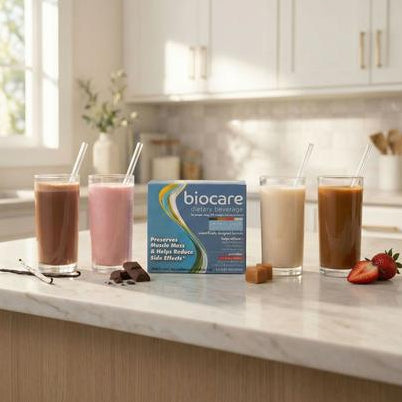
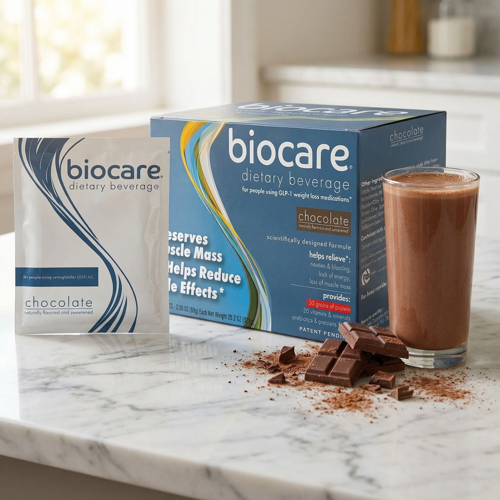
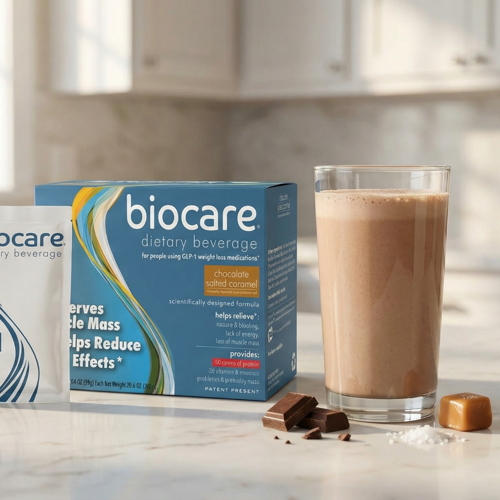
Whole foods come first — but on the days when appetite is low and meals are small, our Fiber & Hydration options are a simple way to add fiber and fluids to your routine. Pair them with water and the meals you're already eating to help support digestive regularity.
Explore Fiber & HydrationFiber on a GLP-1: quick answers
Why does a GLP-1 like Ozempic affect digestion?
GLP-1 medications slow how quickly your stomach empties, which is part of how they reduce appetite. Slower digestion, combined with eating less overall, is why many people notice things feel more sluggish. If you're experiencing this, your healthcare provider is the best person to talk to.
How much fiber should I get each day?
The NIDDK recommends about 22 to 34 grams of fiber a day for adults, depending on age and sex. Build up to it gradually, and pair it with plenty of water. Our fiber calculator can give you a personal target.
What are good high-fiber foods to keep on hand?
Fruits (berries, pears, apples), vegetables, whole grains (oats, brown rice, whole-grain bread), and legumes (beans, lentils, chickpeas) are all easy, fiber-rich staples. Variety helps you get both soluble and insoluble fiber.
What's the difference between soluble and insoluble fiber?
Soluble fiber mixes with water into a gel that slows and smooths digestion; insoluble fiber adds bulk that helps food move through the gut. Most plant foods have a mix of both, so eating a variety covers your bases.
Do I need to drink more water when I eat more fiber?
Yes. Fiber works best with enough fluids — the NIDDK specifically recommends drinking liquids to help fiber do its job. Sip water throughout the day as you increase your fiber.
Should I use a fiber supplement or stick to food?
Whole foods are a great first stop because they bring fiber along with vitamins, minerals, and water. A fiber product can be an easy way to fill gaps on low-appetite days — add it in gradually, and check with your provider about what's right for you.
When should I talk to my healthcare provider?
If digestion changes are uncomfortable, persistent, or worrying, talk with your physician or healthcare provider. They can give you guidance specific to you and your medication.
This article is for general education and is not medical advice. Individual results vary and are not typical or guaranteed. Always consult your physician or healthcare provider before making changes to your health or diet program, especially while taking a GLP-1 medication.
These statements have not been evaluated by the Food and Drug Administration. This product is not intended to diagnose, treat, cure, or prevent any disease.
Ozempic® and Wegovy® are registered trademarks of Novo Nordisk A/S. Mounjaro® and Zepbound® are trademarks owned or licensed by Eli Lilly and Company. Biocare is not affiliated with, endorsed by, or sponsored by these companies.