Electrolytes on a GLP-1: staying hydrated on Ozempic®, Wegovy® or Zepbound®
When your appetite shrinks, your fluid intake often shrinks with it — quietly. Here's how water and electrolytes work together on a GLP-1, and easy ways to keep both where they should be.
Quick answer: GLP-1 medications like Ozempic®, Wegovy® and Zepbound® don't directly dehydrate you — but eating less usually means drinking less too, since about 20% of your daily fluids come from food. Drinking water consistently and getting electrolytes (sodium, potassium, magnesium, calcium) from mineral-rich foods and beverages helps support normal fluid balance, muscle function and energy.
Do GLP-1 medications cause dehydration?
Not directly — semaglutide and tirzepatide aren't diuretics, and nothing in them pulls water out of your body. The effect is indirect. These medications quiet your appetite, and when you eat less, you take in less fluid without noticing: soups, fruit, vegetables and dairy all count toward hydration. Some people also find they simply forget to drink when hunger cues fade.
On days when your stomach is unsettled and you're eating and drinking less than usual, fluid intake can dip further. That's exactly when paying deliberate attention to water and minerals matters most — and when it's worth checking in with your healthcare provider if you're struggling to keep fluids down.
"You don't feel yourself drinking less. Appetite goes quiet, and fluid intake quietly follows."
How much water should you drink on a GLP-1?
There's no single number that fits everyone — needs vary with age, body size, activity, climate and health. As a general benchmark, Mayo Clinic cites guidelines of about 15.5 cups (3.7 liters) of total daily fluids for men and 11.5 cups (2.7 liters) for women — and remember that total includes fluid from food. Your healthcare provider can help you land on the right target for you.
A simple self-check: pale-yellow urine generally suggests you're keeping up; dark yellow suggests you're behind. And don't wait for thirst — on a GLP-1, thirst cues can be as muted as hunger cues.
Which electrolytes matter most — and what do they do?
Electrolytes are minerals that carry an electric charge and help regulate fluid balance, muscle contraction and nerve signaling. Water gets the headlines, but these five do the backstage work:
Sodium
The lead regulator of fluid balance inside and outside your cells. Most of us get plenty — the general guideline is to stay under 2,300 mg/day.
Potassium
Sodium's partner in water balance; supports normal muscle function. The American Heart Association suggests ~3,400 mg/day for men, ~2,600 mg/day for women.
Magnesium
Supports nerve and muscle function and helps balance calcium and potassium. Needs vary by age and sex — see the NIH fact sheet in the sources.
Calcium
Best known for bones and teeth, but also essential for muscle contraction. Intake targets vary by age — NIH guidance linked below.
Chloride
Works alongside sodium to regulate fluid levels and maintain overall electrolyte balance. It typically travels with sodium in foods.
Your daily numbers
Not sure what you need? Our GLP-1 DRI Calculator personalizes your daily vitamin and mineral targets in about a minute.
6 simple hydration habits for GLP-1 users
Sip on a schedule, not on thirst
Drink water consistently through the day — with each meal, after each bathroom break, first thing in the morning. On a GLP-1, thirst is a late signal, so routine beats instinct.
Eat your water
Watermelon, grapes, berries, cucumber and celery are mostly water. When portions are small, water-rich foods make every bite pull double duty.
Lean on soups and broths
Warm, gentle and hydrating — and an easy way to get nutrition in when appetite is low. Browse our GLP-1 recipes for high-protein soup ideas.
Choose mineral-rich foods
Bananas, avocados, oranges, black beans, edamame, tofu, yogurt, almonds and dairy deliver potassium, magnesium and calcium the way nature packages them — with food.
Add electrolytes on light-eating days
On days when you're eating and drinking noticeably less, an electrolyte beverage can help support normal fluid balance. Watch labels — many are heavy on sugar, which you may not want.
Go easy on sugary and energy drinks
They add sugar and caffeine without much hydration payoff. Water, infused water, herbal tea, milk and broth are steadier choices — and step up activity or hot-weather intake accordingly.
Where Biocare fits
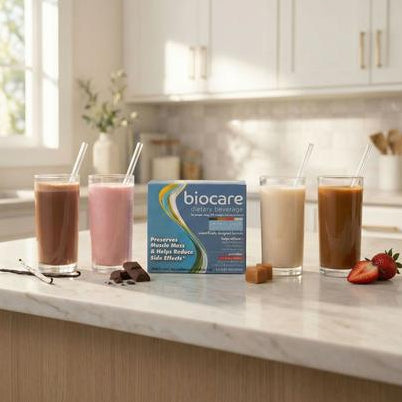
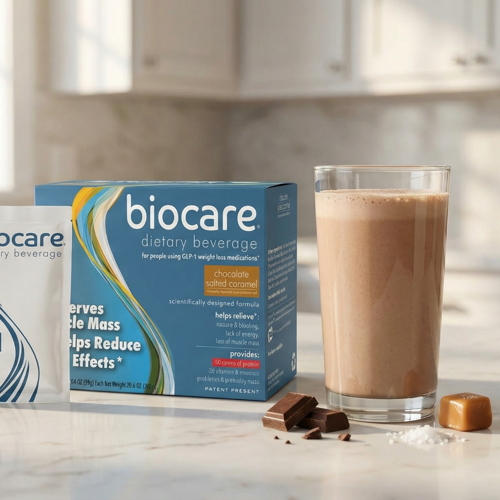
Every Biocare 30G Protein Dietary Beverage is a fluid — so each serving counts toward your daily hydration while delivering protein that supports muscle maintenance, plus naturally occurring electrolytes.
It's not a dedicated electrolyte drink — it's a protein beverage with a thoughtfully balanced mineral profile, plus pre- and probiotics that support gut health and normal nutrient absorption. Explore the Fiber & Hydration collection if you want dedicated hydration support alongside your shakes.
GLP-1 hydration & electrolyte FAQs
Does Ozempic® dehydrate you?
Not directly — it isn't a diuretic. But because it reduces appetite, many people eat and drink less overall, and since roughly 20% of daily fluid comes from food, hydration can slip without you noticing. Consistent water intake and water-rich foods help close the gap.
How much water should I drink on semaglutide or tirzepatide?
General guidelines cited by Mayo Clinic suggest about 15.5 cups (3.7 L) of total daily fluids for men and 11.5 cups (2.7 L) for women, including fluid from food — but your needs depend on your body, activity and climate. Ask your healthcare provider what's right for you.
Do I need an electrolyte drink on a GLP-1?
Not necessarily. Most days, water plus mineral-rich foods cover it. An electrolyte beverage can be a helpful way to support fluid balance on days when you're eating and drinking less than usual — just check labels for added sugar.
Why am I getting muscle cramps on a GLP-1?
Muscles rely on adequate fluids and minerals — potassium, magnesium and calcium all support normal muscle function — so low intake of either can be a factor. If cramps are frequent or severe, talk to your healthcare provider rather than self-diagnosing.
What foods are high in electrolytes?
Bananas, oranges and avocados (potassium); almonds, black beans, edamame and brown rice (magnesium); yogurt, tofu and dairy (calcium). Soups and broths add sodium and fluid together, which is handy on low-appetite days.
Is Biocare an electrolyte drink?
No — it's a 30g protein dietary beverage that happens to carry a balanced electrolyte profile: about 20% DV potassium, 7–13% DV sodium, plus magnesium and calcium. Each shake also counts as fluid toward your daily hydration.
Can you drink too much water?
Yes — very large amounts of plain water in a short time can dilute sodium levels. That's one reason spreading fluids through the day, and getting minerals from food, beats chugging. If you have heart or kidney conditions, ask your provider about fluid targets.
Keep going
Sources
- Mayo Clinic — Water: How much should you drink every day? mayoclinic.org
- American Heart Association — How Potassium Can Help Control High Blood Pressure. heart.org
- NIH Office of Dietary Supplements — Magnesium Fact Sheet for Health Professionals. ods.od.nih.gov
- NIH Office of Dietary Supplements — Calcium Fact Sheet for Health Professionals. ods.od.nih.gov
*These statements have not been evaluated by the Food and Drug Administration. This product is not intended to diagnose, treat, cure, or prevent any disease. Always consult your physician or healthcare provider before making changes to your health or diet program.
Ozempic® and Wegovy® are registered trademarks of Novo Nordisk A/S. Mounjaro® and Zepbound® are trademarks owned or licensed by Eli Lilly and Company, its subsidiaries, or affiliates. Biocare Nutrition is not affiliated with, endorsed by, or sponsored by Novo Nordisk or Eli Lilly.